Skip to content
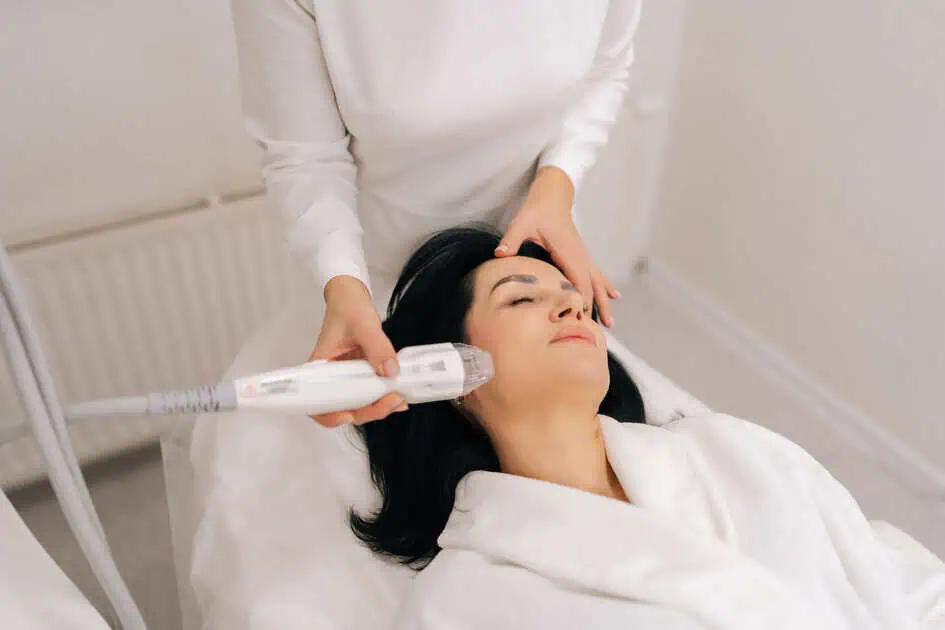
Table of Contents
Acne scarring has a way of outlasting the acne itself. The breakouts settle, the redness fades, and what remains is a surface that catches light unevenly and feels rough under your fingertips. At Fierce Aesthetics Med Spa in Lima, Ohio, this is one of the most common concerns patients bring to a consultation, often after years of trying to correct it with products alone.
VirtueRF microneedling takes a different approach. Instead of working on the surface, it treats the layer where the structural damage actually sits, which is why it has become a widely requested option for acne scar treatment and skin texture improvement.
Can radiofrequency microneedling actually help scarring left behind by acne?
Radiofrequency microneedling combines fine needles with heat energy to stimulate collagen production in the deeper layers of the skin, where acne scarring forms. Most patients see gradual softening of depressed scars and smoother overall texture across a series of sessions, though results vary by scar type and depth.
Why Acne Scars and Rough Texture Stay Behind After Breakouts Clear
Acne scars form because inflammation damages collagen in the dermis, the supportive layer beneath the skin’s surface. When cystic or persistent acne disrupts that structure, the skin repairs itself unevenly, leaving depressions, ridges, and a surface that no longer reflects light smoothly.
It helps to separate two things that often get grouped. Post-inflammatory hyperpigmentation refers to the dark or reddish marks left after a breakout heals, and those frequently fade over months. True textural scarring changes the skin’s architecture, and it does not fade on its own. Serums and topical treatments work on the outermost layers, which helps with discoloration but rarely reaches the depth where scar tissue has formed. Without intervention, those texture changes can persist for years.
The Types of Acne Scars That Respond to Radiofrequency Microneedling
Not every scar responds the same way, and an honest answer starts there. Rolling and boxcar scars tend to respond best to RF microneedling because they involve depressed or tethered tissue that can improve as new collagen builds underneath.
- Rolling scars create soft, wave-like dips and often soften noticeably as the dermis rebuilds.
- Boxcar scars have defined edges and shallow floors that may lift over a treatment series.
- Icepick scars are narrow and deep and often require a combined or alternative approach.
- Raised scarring, meaning hypertrophic or keloid tissue, behaves differently and requires provider assessment before any treatment is considered.
Alongside scar depth, general texture concerns such as enlarged pores and uneven surface tone often improve during the same course of treatment.
How VirtueRF® Microneedling Works Beneath the Skin’s Surface
Microneedling creates controlled micro-injuries in the skin, which signals the body to begin its repair process. On its own, that stimulus produces some collagen response. Radiofrequency changes the equation by delivering heat energy through the needle tips at a set depth, which research suggests prompts a stronger collagen and elastin response than needling alone.
The VirtueRF® platform uses 36 gold-plated needles capable of reaching up to 3.5mm, giving the provider room to match treatment depth to the scar being addressed rather than applying one setting across the entire face.
This is a minimally invasive clinical treatment. The needles break the skin barrier, and it is performed by a trained provider in a controlled setting, not something replicated at home with a handheld roller.
Why Depth Control Is Central to Scar Treatment
Scar tissue does not sit at a uniform depth. A face can carry shallow textural irregularity along the cheeks and deeper tethered scarring near the jawline, and a fixed-depth device treats both the same way. Adjustable energy and pulse duration settings allow a provider to treat a deep rolling scar differently from the surrounding skin in a single session.
The VirtueRF platform includes several handpieces designed for different applications. SmartRF is intended for the face, neck, and scars, while ExactRF can address scarring in more delicate areas, including the upper eyelid. A good outcome comes from a treatment plan built around your specific scar pattern, not the name printed on the device.
What Improvement in Scarring and Texture Actually Looks Like
Collagen remodeling takes time. Most patients begin noticing textural change over several weeks rather than immediately after a session, and improvement typically continues as new collagen forms.
Scars generally soften and become shallower rather than disappearing completely. How much improvement occurs depends on scar type, depth, age, and how your skin heals. Many patients also notice improved overall surface smoothness and tone alongside reduced scar depth, which is often the change they see first in everyday lighting. A series of sessions is usually recommended, and your provider determines that plan during consultation.
Who Is a Good Candidate for VirtueRF® Scar Treatment
Scar treatment works best once active acne is well controlled, since treating inflamed skin is not appropriate. Beyond that, candidacy comes down to a handful of clinical factors your provider will review:
- Skin tone assessment, since radiofrequency microneedling is generally suitable across a wider range of Fitzpatrick skin types than some ablative resurfacing options, though individual assessment still applies
- Current medications, including recent isotretinoin use
- Healing history, particularly any tendency toward keloid formation
- Pregnancy or nursing status
During the consultation, we map scar types across the face and discuss a realistic plan before scheduling anything.
Caring for Your Skin Between Sessions to Support Results
Sun protection is the single most important habit during a treatment series. Newly forming collagen and healing skin are more vulnerable to UV-driven discoloration, and daily SPF protects the progress you are building.
In the days following a session, gentle cleansing and barrier-supporting moisturizers help the skin recover comfortably. Retinoids and exfoliating acids are typically paused temporarily on provider guidance. Ohio’s seasonal shifts also play a role, since dry indoor heat through a Lima winter can leave skin feeling tighter than usual between appointments.
Ready to Talk About Your Acne Scars With a Provider in Lima, OH
Come to your consultation ready to talk about your scar history, what you have already tried, and what bothers you most when you see your skin in natural light. A provider will map the scar types across your face and explain what RF Microneedling Lima, OH patients can reasonably expect from a treatment plan built for that pattern. If you are ready to stop working on the surface and address what is underneath, schedule your RF microneedling consultation today.